What we do
A continuous companion that meets each librarian at their current capability, and changes as they grow.
No new app, no new login. Arivu Mitra arrives in Kannada, on WhatsApp, where the librarian already is, sending the week’s activity, and answering when she asks a question of her own. It speaks in text, voice notes, images and short video, whichever works best, and shows her only her own progress: assistive, never ranked.

To activate a library, it has to serve three things
The 3I framework
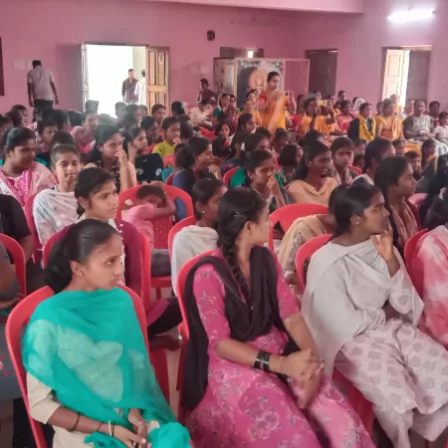
“This place is for me.”
Who can enter: no fee, no role, no appointment. Who can stay, without being asked why. Who can participate: girls, seniors, out-of-school youth.
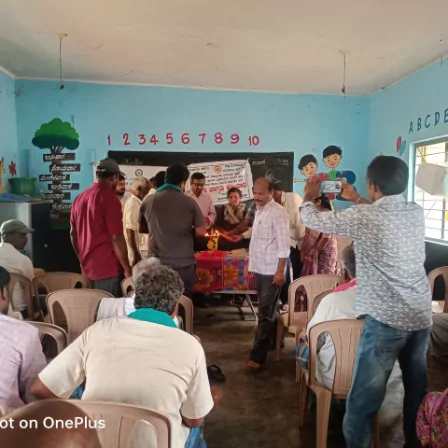
“I can do things here with others.”
Clubs: reading, chess, science, storytelling. Recurring groups that meet on a rhythm. Relationships across hamlet, caste, age and gender.
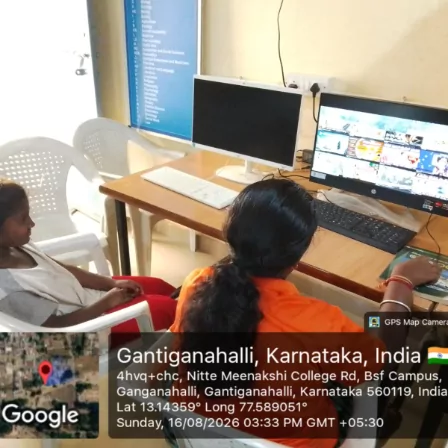
“I can learn and discover here.”
Books read with someone, not only shelved. Digital access to the computers already in the room. Schemes and navigation: what exists and how to reach it.
Library profile building
Every library gets a profile, built from baseline data and from the librarian’s own interaction with the bot, updated weekly. It is what lets the companion speak to this library rather than to an average one.
Updated weekly
Library Profile
Baseline data + the librarian’s interaction with the bot.
Infrastructure & resources. Tubelight, shelves, computers, internet, toilet.
Footfall. Who comes, how often, at what hours.
Activities conducted. What has actually been run in the room.
Audience & participation. Who took part: children, girls, adults, seniors, women.
Progress. How many activities, participation, badges, streaks.
Blockers. No materials, no space, no permission, no time.
Preferred language. Kannada by default; text or voice.
Capability stage. Starting out, active or confident, and what changes with it.
Tiered activation model
What a librarian receives depends on where she is. The model moves from structured guidance to greater autonomy, and the activities she gets change with it.
Building the basics
- ·Step-by-step tasks on library management
- ·Making the space more inviting, aligned with department guidelines
- ·Short, bite-sized child-focused activities with facilitation guide and video
Building practice
- ·Richer child-learning activities
- ·Other cohort activities
- ·Facilitation guide and video
Building autonomy
- ·Multi-cohort, more complex activities
- ·Invited expert sessions
- ·Prompts to share reflections
- ·Contributions back to the Activity Commons
Structured guidance
Greater autonomy
Activity Commons
Ready-to-run activities with a purpose, materials, steps and facilitation guidance, not a static content repository. The system recommends what is useful for this library, this audience and this stage, and learns from what librarians actually try, adapt and repeat.
Activities run and contributed by librarians across Karnataka
Good field practice comes back into the Commons, so the programme gets richer as more libraries participate.
Most frontline technology broadcasts. Arivu Mitra builds a horizontal learning network.
01 · Broadcast
One source, many receivers. Directions and tasks handed down from above.
02 · Network
Librarians connect peer-to-peer, learning from each other, not just from above.
03 · Shared learning
One librarian’s idea, challenge or solution doesn’t stay in one library.
An opportunity for librarians to learn from each other and feel part of a networked cadre, in a job that can otherwise be quite isolating.
Badges, streaks and instant recognition
Around 25 badges for who a librarian engages, what she conducts, how consistently she shows up and how many people she reaches, upgraded versions as she climbs four levels.
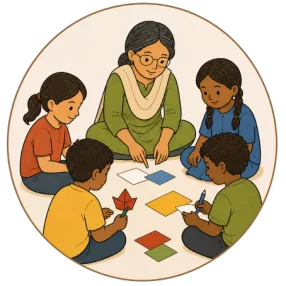
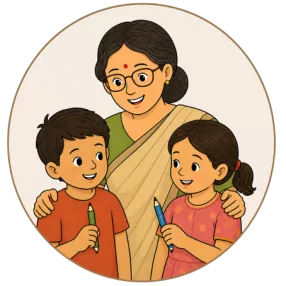
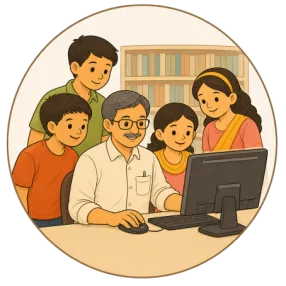




L1
Kidi
1 crown
L2
Deepa
10 crowns
L3
Prakasha
25 crowns
L4
Surya
50 crowns
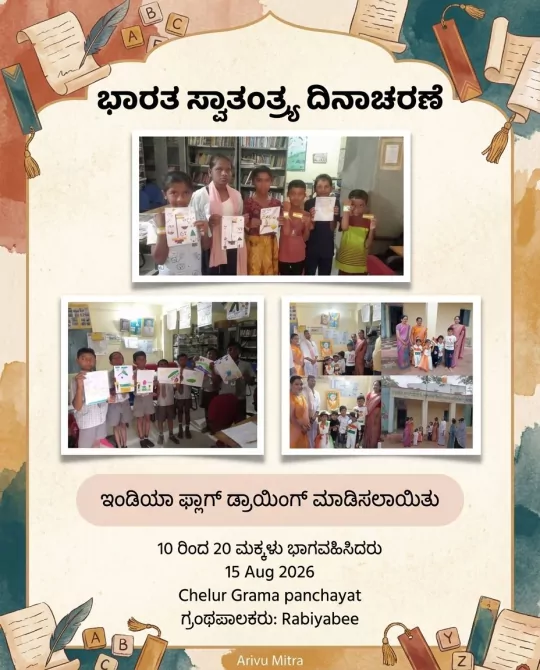
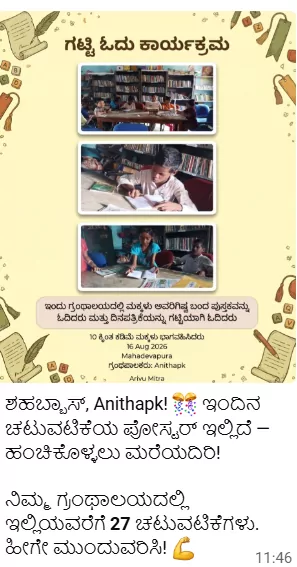
Minutes after a librarian submits an activity, a shareable Kannada flyer naming her and her activity arrives back in her chat.
A public page for every library
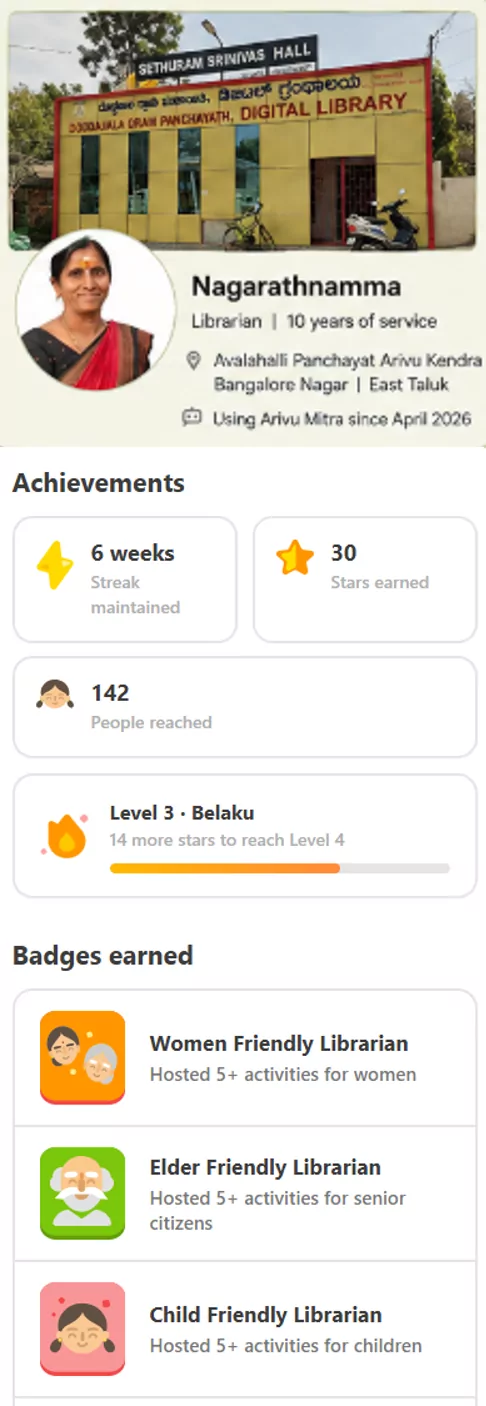
Every librarian has a page of her own, live, shareable, and hers. Her name, her years of service, her panchayat; a calendar where every day she ran something turns green; her streak, her stars, and who is using the library.
Identity
Her name, her years of service, her panchayat.
The year as a calendar
Every day she ran something turns green.
Who she reaches
Children, women, youth, seniors, counted separately, so gaps show.
What has been happening here
Each activity she ran, in her words, with photographs.
Achievements
Streak, stars earned, people reached and the level she is on.
Badges
Every badge she has earned, and what she earned it for.